


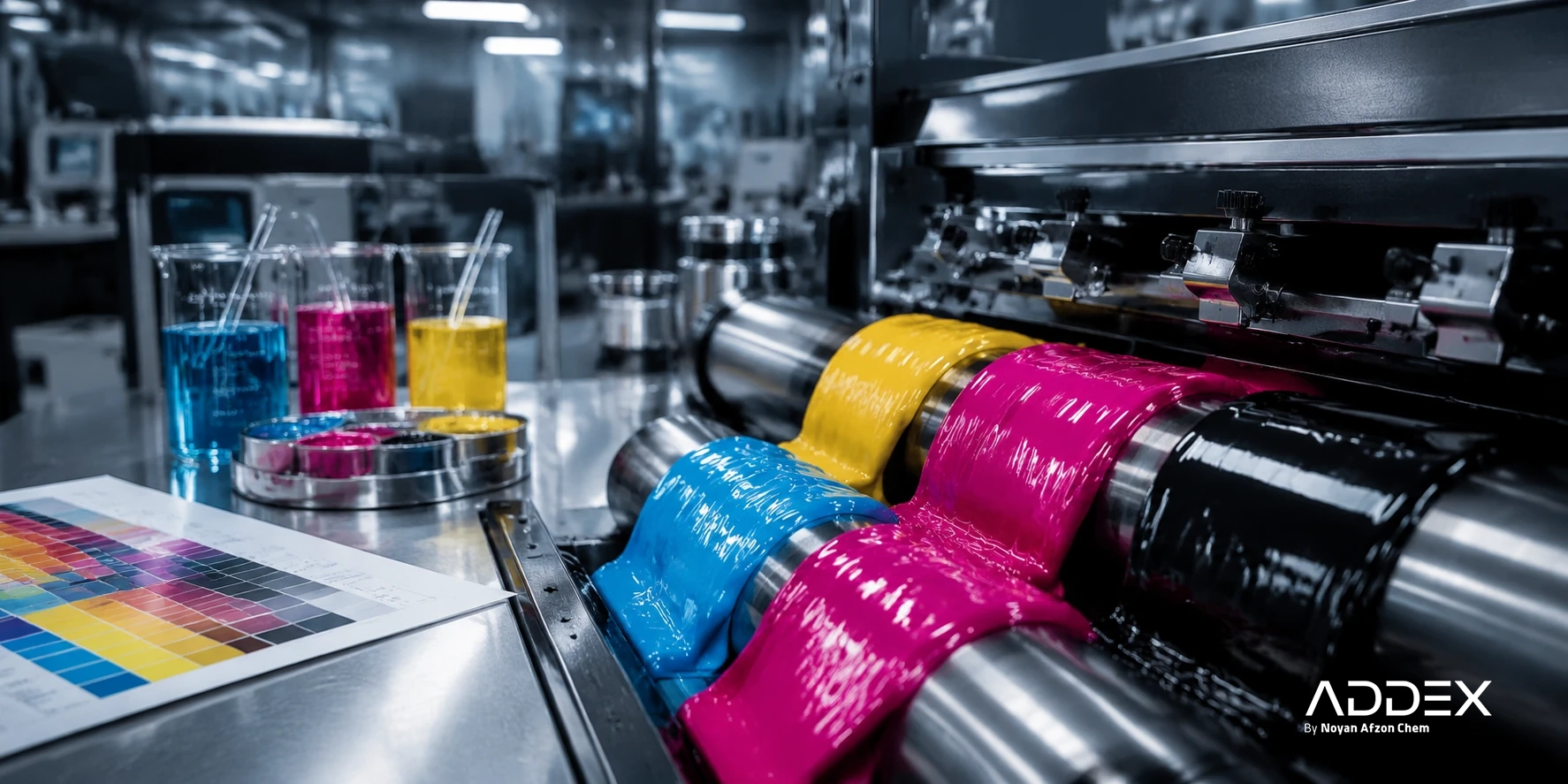
Comprehensive Guide to Printing Inks: Types, Applications & Expert Tips
Introduction
Printing ink is the heart of every printing process — where chemistry, physics, and
creative design come together. Choosing the right ink isn’t just about color;
substrate type, printing method, production speed, environmental conditions,
and safety requirements all matter.
This guide
explains the composition, ink types, selection criteria, troubleshooting, and
professional maintenance tips to ensure consistent print quality.
What Is
Printing Ink and What Are Its Components?
- Pigments: Provide color strength, opacity, and
lightfastness. - Binder (Resin): The glue that binds pigments to the
surface and determines gloss, flexibility, and chemical resistance. - Solvent or Vehicle: Controls viscosity and drying
behavior. It can be water, organic solvent, or UV curable monomer. - Additives: Anti‑foam agents, waxes, dispersants, and
dryers that refine viscosity and performance.
How It Works:
Ink is
transferred to the surface, spreads or penetrates slightly, and then dries —
through evaporation, oxidation, absorption, or UV curing — to form a strong,
stable film.
Ink Types by
Printing Process
Offset Ink
- Features: Medium‑high viscosity; requires perfect
water–ink balance; dries by oxidation/penetration. - Applications: Magazines, brochures, folding
cartons, paper labels. - Key considerations: Paper coating level, drying time,
rub resistance.
Flexographic
Ink
- Features: Low viscosity for anilox rollers; usually
water‑ or solvent‑based. - Applications: Flexible packaging, paper bags,
corrugation, film labels. - Tips: Match surface tension (dyne value) of
substrate; ensure fast drying and adhesion on polyolefin films.
Gravure Ink
- Features: Very low viscosity; transferred by engraved
cells; capable of high uniformity. - Applications: High‑volume packaging, decorative
films, wraps. - Tips: Balanced solvent evaporation, consistent lay‑down,
sharp dot reproduction.
Screen
Printing Ink
- Features: Thick ink films; possible special effects
(metallic, emboss, tactile). - Applications: Textiles, glass, electronics panels,
signage. - Tips: Adhesion to non‑absorbent surfaces, wash
durability, scratch resistance.
Digital
Printing Ink (Inkjet / Toner)
- Inkjet: Water‑based, solvent, sublimation, latex, or
UV curable systems. - Toner: Resin‑based dry powder for office or
industrial digital presses.
Ink
Classification by Drying System
- Water‑Based: Eco‑friendly; dries through water
evaporation. Best for paper, board, or primed film. - Solvent‑Based: Uses volatile organic solvents;
excellent film adhesion, requires air handling systems. - UV / EB Curable: Instant curing by UV light or
electron beam; high durability and chemical resistance. - Oxidation‑Drying: Common in sheet‑fed offset; based on
alkyd oil oxidation.
Choosing the
Right Printing Ink (Check‑List)
Factor | Key Points |
Printing | Offset, flexo, |
Substrate | Coated/uncoated |
Performance | Scratch, light, |
Legal/Health | Food contact |
Production | Press speed, |
Economics | Cost per m², |
Post‑Processes | Varnish, foil, |
Common Ink
Problems & Troubleshooting
Issue | Possible | Quick Fix |
Slow drying or | Thick ink | Reduce coat |
Poor adhesion / | Incompatible | Corona or |
Faded color | Over‑dilution, | Check |
Ink misting in | Too low | Increase |
Set‑off | Insufficient | Use anti‑set‑off |
Lamination | Additive | Run a |
Safety &
Compliance
- Follow food‑contact regulations (EU,
FDA, or local standards). - Ensure VOC emission control for
solvent inks. - Protect operators from UV or ozone
exposure during curing. - Always keep updated SDS (Safety Data
Sheet) documentation.
Storage &
Handling
- Store at stable room temperature
(15–25 °C), away from sunlight or heat. - Keep containers sealed to prevent
contamination or solvent loss. - Stir gently before use; check
viscosity periodically. - Apply FIFO system and never use
expired ink.
Key Vocabulary
Viscosity,
Surface Tension (Dyne Level), Binder, Pigment, Drier, UV Curing, Lamination,
Migration, Rheology, Anilox, Doctor Blade, Dot Gain, Set‑off.
Frequently
Asked Questions
1. What’s the
difference between water‑based and solvent‑based ink?
Water‑based inks
are more eco‑friendly — ideal for paper printing — while solvent‑based inks
adhere better to films and foils.
2. UV or
solvent: which is better?
UV inks cure
instantly and deliver superior durability but require special lamps. Solvent
inks suit high‑speed flexible packaging lines.
3. How to test
substrate readiness?
Use a dyne pen or
test ink to measure surface energy and adhesion level.
4. Will one
ink work on all substrates?
No. Polyolefin
films (PP/PE) often need surface treatment (corona or primer).
Conclusion
Selecting the right printing ink is a balance of
quality, cost, and functionality. Consider print process, substrate, and
production conditions for consistent, durable results. Proper maintenance and
material testing significantly reduce waste and downtime
سوالات متدوال
نقش اصلی افزودنیها (Additives) در فرمولاسیون رنگ چیست؟
افزودنیها با وجود اینکه درصد کمی از فرمولاسیون را تشکیل میدهند، نقشی حیاتی در بهبود خواص رنگ دارند. این مواد وظایفی نظیر پایدارسازی رنگدانهها، کنترل غلظت (رئولوژی)، جلوگیری از ایجاد کف، بهبود چسبندگی و افزایش مقاومت در برابر عوامل محیطی را بر عهده دارند.
علت ایجاد حباب یا کف در هنگام تولید یا اجرای رنگ چیست و چگونه رفع میشود؟
ایجاد کف معمولاً ناشی از فرآیند اختلاط سریع یا استفاده از سورفکتانتهاست. برای رفع این مشکل از ضدکفها (Defoamers) استفاده میشود. ضدکفهای ادِکس با کاهش تنش سطحی، حبابهای هوا را از بین برده و از ایجاد نقصهای ظاهری در فیلم نهایی رنگ جلوگیری میکنند.
چرا پس از مدتی رنگدانه در ظرف رنگ کلوخه میشود؟
علت اصلی این پدیده، عدم پایداری دیسپرسیون رنگدانه است. استفاده از عوامل دیسپرسکننده (Dispersing Agents) تخصصی باعث ایجاد ممانعت فضایی یا بارهای الکتریکی بین ذرات شده و از کلوخه شدن و تهنشینی آنها جلوگیری میکند تا پایداری انبارداری محصول افزایش یابد.
تفاوت بین افزودنیهای پایه آب و پایه حلال در چیست؟
افزودنیها بر اساس ساختار شیمیایی خود برای محیطهای مختلف طراحی میشوند. افزودنیهای پایه آب باید قابلیت انحلال یا دیسپرس شدن در آب را داشته باشند، در حالی که در سیستمهای پایه حلال، سازگاری با رزینهای آلکیدی، اپوکسی یا پلیاورتان اولویت دارد. انتخاب افزودنی اشتباه میتواند منجر به کدورت یا جداشدگی رنگ شود.
چگونه میتوان براقیت و یکنواختی سطح رنگ (Leveling) را بهبود داد؟
برای رسیدن به سطحی صاف و بدون اثر قلممو یا غلطک، از افزودنیهای جریاندهنده و همترازکننده (Leveling Agents) استفاده میشود. این مواد با اصلاح تنش سطحی، به خیسشوندگی بهتر سطح کمک کرده و از ایجاد نقصهایی مانند “چشم ماهی” جلوگیری میکنند.


بدون نظر