


Epoxy Flooring and Coatings and the Role of Additives
Introduction
Epoxy flooring and coatings are among the most widely used and durable industrial and construction surface systems due to their high strength, environmental resistance, and appealing glossy finish. The performance and quality of these coatings significantly depend on specialized additives incorporated into their formulations. Additives play a critical role in enhancing mechanical, chemical, and aesthetic properties, ultimately resulting in longer-lasting and more effective surface protection. This article examines different types of additives and their impact on epoxy flooring and coatings.
Common Issues Without Using Additives
- Formation of bubbles and foam leading to mechanical weakness and surface defects
- Poor adhesion to substrates
- Color changes and yellowing from UV exposure and heat
- Excessive hardness causing brittleness
- Inappropriate curing times disrupting application workflow
Major Categories of Additives in Epoxy Flooring and Coatings
- Defoamers: Reduction of foam and trapped air bubbles
- Flow Agents: Facilitation of even spreading and smooth finish
- Curing Agents: Control of curing process and enhancement of resistance
- Wetting Agents: Improvement of wetting and particle dispersion
- Stabilizers: Protection against discoloration and surface degradation
Impact of Additives on Final Coating Quality
Additive Type | Key Effects |
Defoamers | Bubble elimination and smoother surfaces |
Flow Agents | Better paint distribution, uniform thickness |
Curing Agents | Enhanced durability and mechanical/chemical resistance |
Wetting Agents | Stabilization of formulation and uniform dispersion |
Stabilizers | Increased resistance to sunlight and heat |
Practical Tips on Additive Usage
- Precise dosage tailored to epoxy type and environmental conditions is essential
- Additives should be selected based on system (single vs. two-component) and application
- Real-world testing before mass production ensures quality assurance
- Intelligent combinations of additives may yield synergistic performance enhancement
Conclusion
Proper and strategic use of additives is key to formulating epoxy flooring and coatings that are durable, attractive, and high-performing. Additives improve both technical and aesthetic attributes, extending the lifespan and maintaining coating quality under harsh environmental conditions

سوالات متدوال
نقش اصلی افزودنیها (Additives) در فرمولاسیون رنگ چیست؟
افزودنیها با وجود اینکه درصد کمی از فرمولاسیون را تشکیل میدهند، نقشی حیاتی در بهبود خواص رنگ دارند. این مواد وظایفی نظیر پایدارسازی رنگدانهها، کنترل غلظت (رئولوژی)، جلوگیری از ایجاد کف، بهبود چسبندگی و افزایش مقاومت در برابر عوامل محیطی را بر عهده دارند.
علت ایجاد حباب یا کف در هنگام تولید یا اجرای رنگ چیست و چگونه رفع میشود؟
ایجاد کف معمولاً ناشی از فرآیند اختلاط سریع یا استفاده از سورفکتانتهاست. برای رفع این مشکل از ضدکفها (Defoamers) استفاده میشود. ضدکفهای ادِکس با کاهش تنش سطحی، حبابهای هوا را از بین برده و از ایجاد نقصهای ظاهری در فیلم نهایی رنگ جلوگیری میکنند.
چرا پس از مدتی رنگدانه در ظرف رنگ کلوخه میشود؟
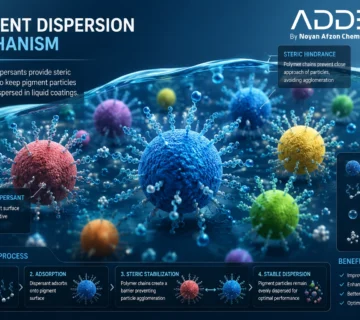
علت اصلی این پدیده، عدم پایداری دیسپرسیون رنگدانه است. استفاده از عوامل دیسپرسکننده (Dispersing Agents) تخصصی باعث ایجاد ممانعت فضایی یا بارهای الکتریکی بین ذرات شده و از کلوخه شدن و تهنشینی آنها جلوگیری میکند تا پایداری انبارداری محصول افزایش یابد.
تفاوت بین افزودنیهای پایه آب و پایه حلال در چیست؟
افزودنیها بر اساس ساختار شیمیایی خود برای محیطهای مختلف طراحی میشوند. افزودنیهای پایه آب باید قابلیت انحلال یا دیسپرس شدن در آب را داشته باشند، در حالی که در سیستمهای پایه حلال، سازگاری با رزینهای آلکیدی، اپوکسی یا پلیاورتان اولویت دارد. انتخاب افزودنی اشتباه میتواند منجر به کدورت یا جداشدگی رنگ شود.
چگونه میتوان براقیت و یکنواختی سطح رنگ (Leveling) را بهبود داد؟
برای رسیدن به سطحی صاف و بدون اثر قلممو یا غلطک، از افزودنیهای جریاندهنده و همترازکننده (Leveling Agents) استفاده میشود. این مواد با اصلاح تنش سطحی، به خیسشوندگی بهتر سطح کمک کرده و از ایجاد نقصهایی مانند “چشم ماهی” جلوگیری میکنند.


بدون نظر