


Comprehensive Guide to Antifoams and Defoamers
Foam Control Solutions and Quality Enhancement in Manufacturing Processes
Introduction
The Hidden Challenge in Coating Manufacturing
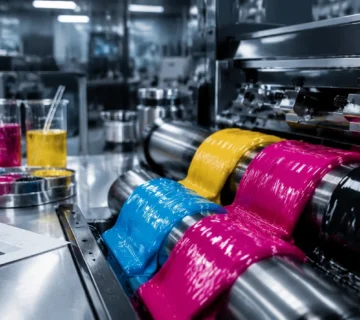
In production lines for paints, inks, and industrial coatings, processes such as mixing, pumping, and application (via rollers or spraying) inevitably generate foam. The presence of entrapped air bubbles is far more than a minor nuisance; it is a major quality control hazard. Entrapped bubbles can cause pinholes in the dry film, loss of gloss, viscosity fluctuations, and weak spots that compromise the corrosion resistance of the final coating.
This article provides a scientific overview of how antifoams work, their different classifications, and how to select the optimal grade for your specific formulation.
1. How Do Bubbles and Foam Form?
Before selecting a defoamer, it is essential to understand the nature of the issue. Foam typically manifests in two distinct forms:
- Macro-foam (Surface Foam): Large, stable bubbles that accumulate on the liquid surface, usually generated by high-shear mixing.
- Micro-foam (Air Entrainment): Tiny, micron-sized bubbles trapped within the bulk liquid, commonly encountered in water-based or high-solid systems.
This phenomenon is driven by a reduction in surface tension and the presence of surfactants, such as dispersing agents or wetting additives.
2. What is an Antifoam and How Does It Work? (Mechanism of Action)
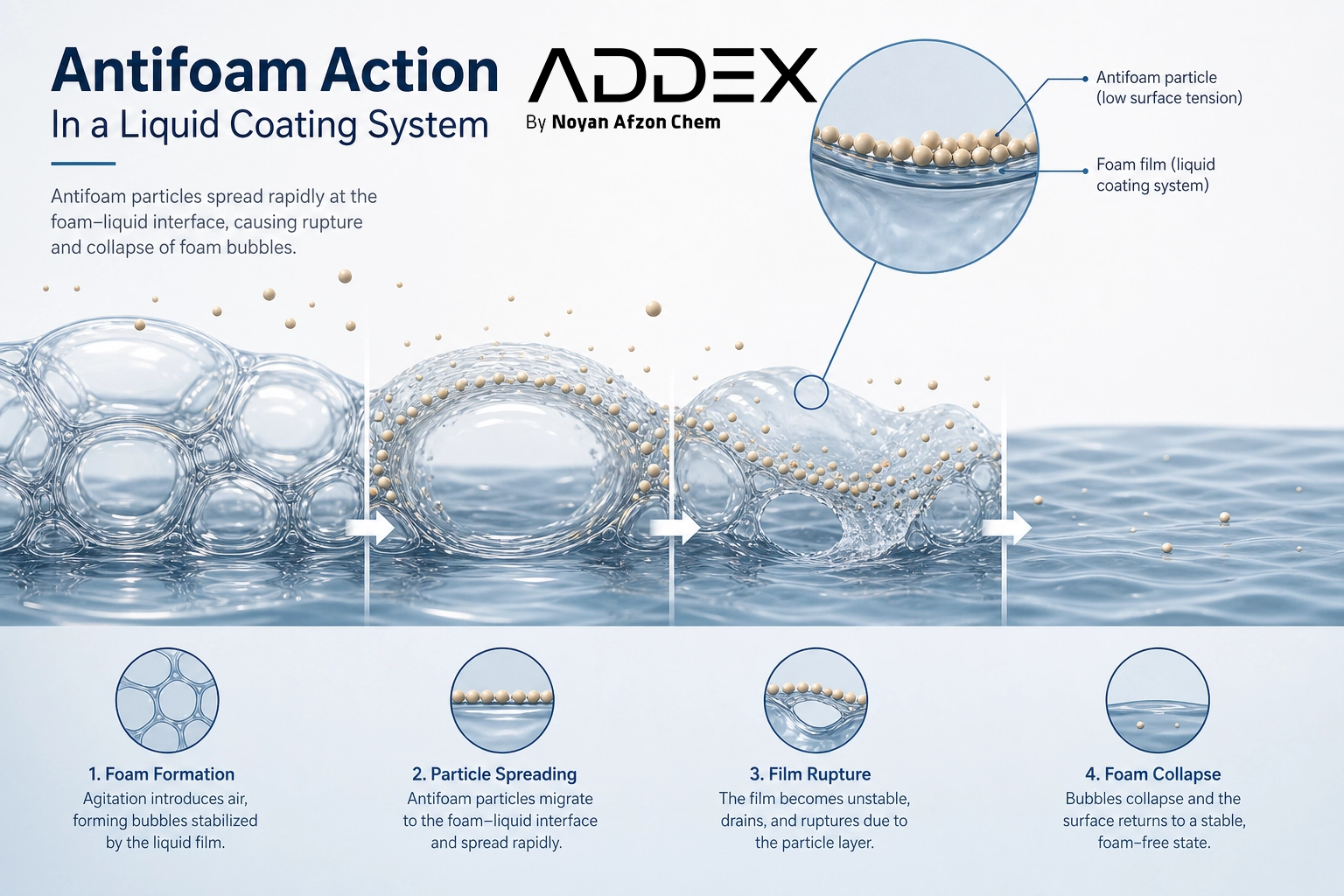
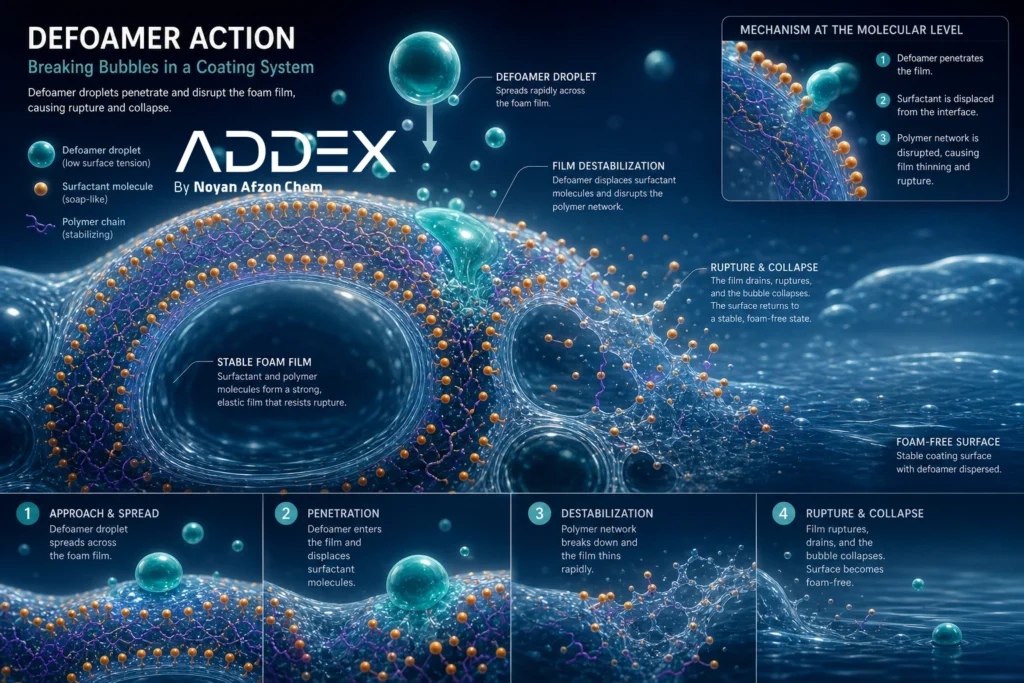
Antifoams are specialized surface-active agents designed to destabilize bubble structures. Their primary mechanism consists of three steps:
- Adsorption at the Interface: The active molecules migrate toward the bubbles and adsorb at the air-liquid interface.
- Surface Tension Gradient Alteration: The antifoam creates local instability in the bubble’s lamella (thin liquid wall), weakening its structure.
- Bubble Rupture (Deflation): Due to this instability, the bubble wall ruptures, allowing the entrapped air to escape.
3. Classification of Antifoams by Chemical Nature
Selecting the right chemical class of antifoam is the critical first step in formulation:
A) Silicone-Based Antifoams
These are the most popular and powerful defoamers in the industry.
- Advantages: Extremely high efficiency at low dosage rates; excellent stability across a wide pH range.
- Applications: Industrial coatings, automotive coatings, and solvent-based systems.
- Important Note: Overdosage can lead to surface defects such as “fish-eyes” or loss of intercoat adhesion.
B) Non-Silicone / Organic Antifoams
These are typically formulated from vegetable oils, fatty acids, or polyethylene glycol (PEG).
- Advantages: Excellent compatibility with sensitive systems, zero risk of adhesion failure, and suitability for specialized applications like food-contact coatings.
- Applications: Water-based architectural paints, cosmetic coatings, and certain high-solid systems.
C) Emulsions vs. Solutions
- Emulsions: Dispersible in water; designed primarily for water-borne systems.
- Solutions (Solvent-based): Designed specifically for solvent-borne systems.
4. Formulation Challenges: The Conflict Between Dispersing Agents and Antifoams
One of the most complex aspects of paint formulation is the interaction between dispersing agents and antifoams.
Dispersants are, by nature, surfactants that tend to stabilize foam. Consequently, the more effective a dispersant is at stabilizing pigments, the more foam it is likely to generate. The role of the antifoam is to eliminate these bubbles without disrupting pigment stabilization.
- Common Formulation Error: Using an incompatible antifoam that reacts poorly with the dispersant or binder, leading to surface defects such as crawling or cratering in the cured paint film.
5. Step-by-Step Guide to Selecting the Right Antifoam
To ensure the correct selection, review the following checklist:
- Identify the System Type: Is it water-borne or solvent-borne? (This determines whether you need an emulsion or a 100% active organic/silicone solution).
- Locate the Source of Foam: Does the foaming occur during the high-speed grinding stage or during application (spraying, rolling, brushing)?
- Evaluate Adhesion Sensitivity: Is the system highly sensitive to surface energy changes (e.g., automotive basecoats/clearcoats)? If yes, opt for compatible non-silicone or modified silicone defoamers.
- Assess Resin and Pigment Compatibility: Does the antifoam cause haziness, phase separation, or seeding in the paint?
- Conduct Dosage Ladders: Always start testing with the minimum recommended dosage and optimize upward.
6. Indicators of Poor Antifoam Performance
If you experience any of the following issues, your current antifoam choice is not optimized:
- Micro-bubbles remaining in the millbase after the grinding process.
- The appearance of pinholes on the coating surface after curing.
- Excessive foaming during product pumping or packaging lines.
- Loss of surface gloss in the dried coating.
7. Mechanism of Action in Paint and Coating Systems
Antifoams work by penetrating the thin liquid film (lamella) surrounding the bubble. When a bubble forms, a highly stable boundary layer is established between the air and the liquid. The defoamer breaks this stability by lowering the local surface tension, causing the liquid to drain away from the bubble wall until it collapses.
In practice, this process ensures:
- Rapid rupture of surface foam.
- Efficient release of micro-entrapped air.
- A defect-free, uniform dry film.
- Enhanced aesthetic and technical properties of the coating.
8. Antifoam vs. Defoamer: The Difference
While these terms are often used interchangeably, they have a subtle technical distinction:
- Antifoams: Formulated to prevent the generation of foam before it starts.
- Defoamers: Formulated to break and destroy existing foam that has already accumulated.
In most coating formulations, a single additive is selected to perform both functions simultaneously.
9. Applications Across Various Industries
Foam control is vital not only in coatings but also in several related chemical sectors:
- Paint & Coating Industry
- Water-based paints
- Solvent-based paints
- Industrial coatings
- Architectural/Decorative coatings
- Primers and clearcoats
- Adhesives & Sealants
- Eliminating air pockets during high-shear mixing
- Preventing structural and surface defects in the joint
- Improving final bond strength and appearance
- Printing Inks
- Controlling foam during high-speed ink circulation
- Enhancing print definition and clarity
- Maintaining ink stability
- Resins & Emulsion Polymerization
- Removing entrapped air during monomer conversion
- Improving product uniformity
- Optimizing reactor yield and throughput
10. Recommended Addition Points
The performance of a defoamer is highly dependent on when it is introduced during manufacturing:
- Grind Stage (Millbase): Added early to withstand high-shear mixing and suppress foam caused by pigment dispersion. Stronger, less compatible defoamers are often used here because the high shear helps disperse them.
- Let-down Stage: Added under low-shear conditions. A highly compatible, easily dispersible antifoam should be used here to avoid surface defects.
- Post-Addition (Final Tuning): Added prior to packaging to eliminate any remaining surface foam.
11. Antifoam Dosage
Defoamer dosage must be carefully calibrated. Under-dosing leads to inadequate foam control, while over-dosing can cause:
- Cratering
- Intercoat adhesion failure
- Surface crawling
- Haze or film turbidity
Therefore, it is highly recommended to perform a dosage ladder study (typically starting from 0.1% to 1.0% by weight of the total formulation) to find the optimum performance window.
12. Common Problems Caused by Incorrect Antifoam Selection
Choosing an incompatible or low-grade antifoam can lead to severe defects, including:
- Persistent surface foam and micro-foam.
- Micro-bubbles trapped within the dry film.
- Loss of gloss.
- Pinholes.
- Surface crawling or dewetting.
- Crater formation.
- Phase separation in the can.
- Reduced transparency in clearcoats.
Selecting the right defoamer is not just picking an additive; it is a critical formulation decision.
13. Characteristics of an Ideal Antifoam
A high-performance antifoam should offer:
- High efficiency in foam control at minimal dosages.
- Optimal compatibility with the resin matrix.
- No contribution to surface defects (craters, crawling, fish-eyes).
- Long-term storage stability (no loss of activity over time).
- Fast-acting knockdown and long-lasting persistence.
- No adverse effects on gloss, transparency, or adhesion.
Technical and Commercial Summary
Antifoams are among the most critical additives in the coatings industry. By managing foam and eliminating entrapped air, they play a vital role in ensuring surface aesthetics, reducing production waste, and enhancing manufacturing efficiency.
The correct selection depends on the system chemistry (solvent-borne vs. water-borne), the resin type, surface sensitivity, and the stage of addition. In professional formulations, the right antifoam makes the difference between an average product and a premium-grade coating.
Are you looking for a definitive solution to foam control in your production process?
Selecting the wrong defoamer can lead to costly batch rejections and customer complaints. Our technical team is ready to analyze your formulation and recommend the most stable, efficient antifoam solutions.
Contact our technical specialists today to receive expert advice and request free lab samples for evaluation.
سوالات متدوال
ADDEX-DS 1047 چیست و چه کاربردی دارد؟
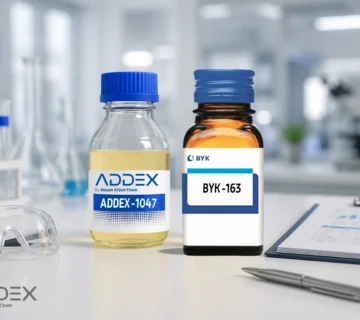
ADDEX-DS 1047 یک ترکننده و دیسپرسکننده پایه حلال بر پایه پلییورتان اصلاحشده است که برای پخش پایدار رنگدانههای آلی، معدنی و کربنبلک در رنگها، پوششها، جوهرهای چاپ و خمیرهای رنگدانه استفاده میشود.
ADDEX-DS 1047 چه تفاوتی با DISPERBYK-163 دارد؟
این دو محصول از نظر کاربری در یک خانواده قرار میگیرند و هر دو برای بهبود دیسپرسیون رنگدانه، کاهش ویسکوزیته و افزایش براقیت طراحی شدهاند. طبق مقاله، تفاوت اصلی آنها در درصد ماده فعال/جامد است و ADDEX-DS 1047 میتواند در بسیاری از فرمولاسیونها به عنوان جایگزین عملکردی بررسی شود.
ADDEX-DS 1047 برای چه نوع رنگدانههایی مناسب است؟
این افزودنی برای دیسپرسیون رنگدانههای آلی، معدنی و کربنبلک مناسب است و در سیستمهای براق و فرمولاسیونهای پایه حلال عملکرد خوبی دارد.
استفاده از ADDEX-DS 1047 چه مزایایی در فرمولاسیون رنگ دارد؟
از مهمترین مزایا میتوان به کاهش ویسکوزیته آسیاب، افزایش براقیت، بهبود رنگدهی، کاهش زمان تولید، جلوگیری از فلودینگ و فلوتینگ و افزایش پایداری سیستم اشاره کرد.
ADDEX-DS 1047 برای چه صنایعی توصیه میشود؟
این محصول برای رنگهای صنعتی، رنگهای خودرویی، پوششهای ساختمانی، جوهرهای چاپ و خمیرهای رنگدانه مناسب است و بهویژه برای تولیدکنندگانی که به دنبال جایگزین داخلی برای محصولات وارداتی و کاهش هزینه تمامشده هستند، گزینهای قابل بررسی است.


بدون نظر