


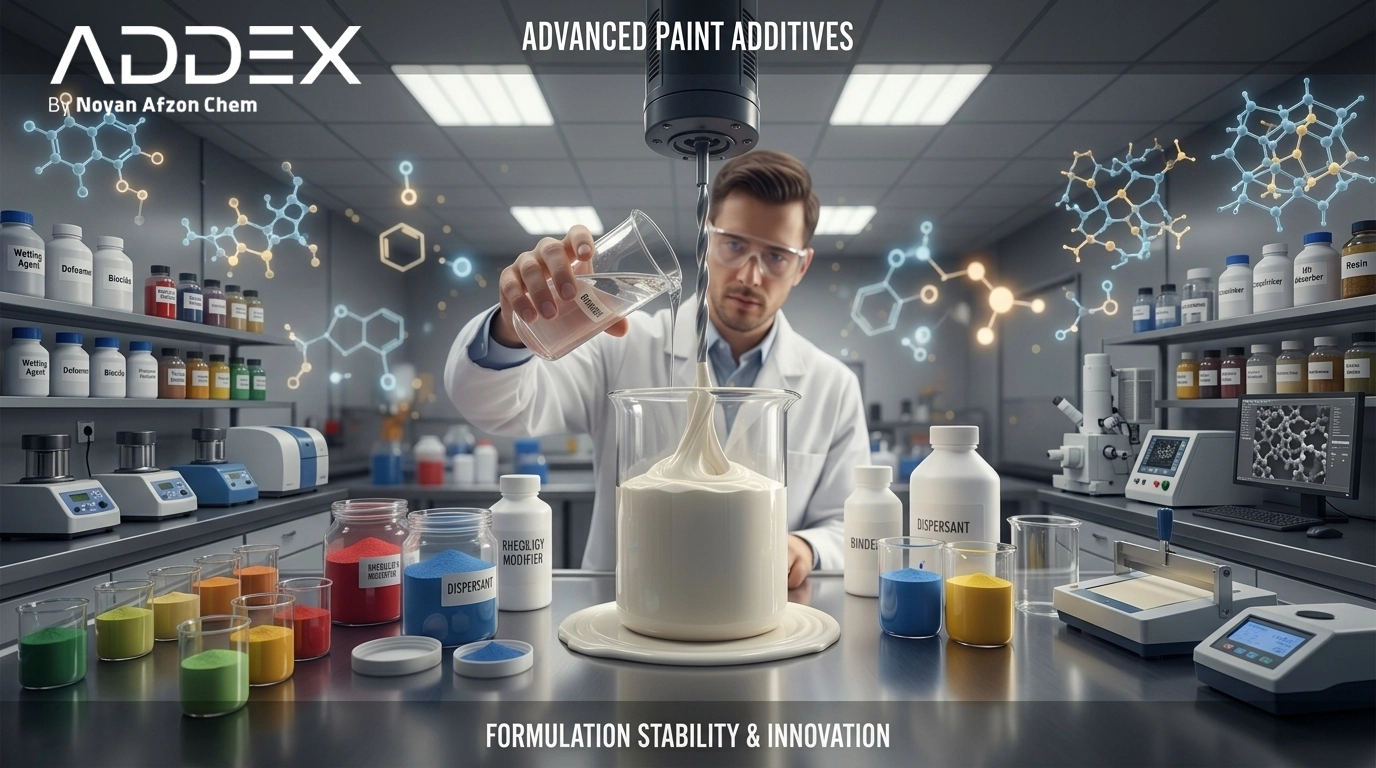
The Role of Additives in Paint Manufacturing: From Rheology Control to Formulation Stability
Introduction
Additives are not only used to improve the final properties of coatings; they also play a critical role throughout the entire manufacturing process. Many issues in paint production — such as poor pigment dispersion, foam formation, sedimentation, viscosity instability, and inconsistent milling — can only be controlled by selecting the right additives.
This article takes a technical and practical look at how additives influence different stages of paint production, and how choosing the right ones can improve efficiency, reduce energy consumption, stabilize the formulation, and ensure uniform product quality.
- Additives Used in the Pre‑Mixing Stage
The pre‑mixing stage lays the foundation for a stable and efficient production process. Any weakness here typically carries over into the following steps.
1.1 Wetting Agents
Key functions:
- Accelerate the wetting of pigments
- Improve resin–pigment compatibility
- Reduce seed formation
- Shorten the milling time
1.2 Defoamers
At this early stage, foam forms quickly due to mechanical agitation. Proper defoamers:
- Prevent air entrapment
- Improve production efficiency
- Reduce defects that may appear during milling
- Additives in the Milling / Grinding Stage
During milling, pigments must reach the required particle size and be stabilized properly.
2.1 Dispersing Additives
Core benefits:
- Lower energy demand during milling
- Stabilize finely ground particles
- Prevent reflocculation
- Improve tinting strength
A high-performance dispersant can reduce milling time by 30–50%.
- Rheology Control Additives in the Let‑Down Stage
When binders, solvents, or water are added, controlling rheology becomes essential.
3.1 Thixotropic Agents
Advantages:
- Prevent pigment settling
- Build a gel‑like structure at rest
- Improve sag resistance
3.2 Associative Thickeners
Functions:
- Improve flow and leveling
- Provide controlled viscosity under different shear rates
- Excellent behavior in waterborne systems
- Stabilizing and Surface‑Enhancing Additives in Final Adjustment
At the final stage, the goal is to achieve a smooth, uniform, and stable coating.
4.1 Surface Additives
They help:
- Enhance gloss or controlled matting
- Improve surface uniformity
- Reduce defects such as craters, pinholes, or orange peel
4.2 In‑Can Preservatives (Biocides)
Particularly important in water-based coatings:
- Prevent microbial growth
- Maintain viscosity over time
- Extend storage life
- How Additive Selection Improves Production Efficiency
Choosing the right additives results in:
- Lower energy consumption
- More consistent batch quality
- Higher formulation stability
- Reduced production waste
- Shorter milling and mixing times
In many plants, production inefficiencies stem from incorrect additive selection or improper dosage.
- Emerging Trends in Production‑Focused Additives
Latest developments are moving toward:
- Multi-functional additives (all‑in‑one)
- Greater compatibility with low‑VOC systems
- Reduced dosage with improved efficiency
- Smart additives activated by specific triggers
- Nano‑additive systems for improved dispersion and surface durability
Conclusion
Additives play a far greater role than simply enhancing the final appearance of a coating. They are essential engineering tools for optimizing the manufacturing process itself. From controlling rheology to ensuring proper dispersion and preventing foam, additives support efficient, stable, and cost‑effective paint production.
A well-designed additive package results in faster production, improved stability, and better overall coating performance.
سوالات متدوال
نقش اصلی افزودنیها (Additives) در فرمولاسیون رنگ چیست؟
افزودنیها با وجود اینکه درصد کمی از فرمولاسیون را تشکیل میدهند، نقشی حیاتی در بهبود خواص رنگ دارند. این مواد وظایفی نظیر پایدارسازی رنگدانهها، کنترل غلظت (رئولوژی)، جلوگیری از ایجاد کف، بهبود چسبندگی و افزایش مقاومت در برابر عوامل محیطی را بر عهده دارند.
علت ایجاد حباب یا کف در هنگام تولید یا اجرای رنگ چیست و چگونه رفع میشود؟
ایجاد کف معمولاً ناشی از فرآیند اختلاط سریع یا استفاده از سورفکتانتهاست. برای رفع این مشکل از ضدکفها (Defoamers) استفاده میشود. ضدکفهای ادِکس با کاهش تنش سطحی، حبابهای هوا را از بین برده و از ایجاد نقصهای ظاهری در فیلم نهایی رنگ جلوگیری میکنند.
چرا پس از مدتی رنگدانه در ظرف رنگ کلوخه میشود؟
علت اصلی این پدیده، عدم پایداری دیسپرسیون رنگدانه است. استفاده از عوامل دیسپرسکننده (Dispersing Agents) تخصصی باعث ایجاد ممانعت فضایی یا بارهای الکتریکی بین ذرات شده و از کلوخه شدن و تهنشینی آنها جلوگیری میکند تا پایداری انبارداری محصول افزایش یابد.
تفاوت بین افزودنیهای پایه آب و پایه حلال در چیست؟
افزودنیها بر اساس ساختار شیمیایی خود برای محیطهای مختلف طراحی میشوند. افزودنیهای پایه آب باید قابلیت انحلال یا دیسپرس شدن در آب را داشته باشند، در حالی که در سیستمهای پایه حلال، سازگاری با رزینهای آلکیدی، اپوکسی یا پلیاورتان اولویت دارد. انتخاب افزودنی اشتباه میتواند منجر به کدورت یا جداشدگی رنگ شود.
چگونه میتوان براقیت و یکنواختی سطح رنگ (Leveling) را بهبود داد؟
برای رسیدن به سطحی صاف و بدون اثر قلممو یا غلطک، از افزودنیهای جریاندهنده و همترازکننده (Leveling Agents) استفاده میشود. این مواد با اصلاح تنش سطحی، به خیسشوندگی بهتر سطح کمک کرده و از ایجاد نقصهایی مانند “چشم ماهی” جلوگیری میکنند.


بدون نظر